
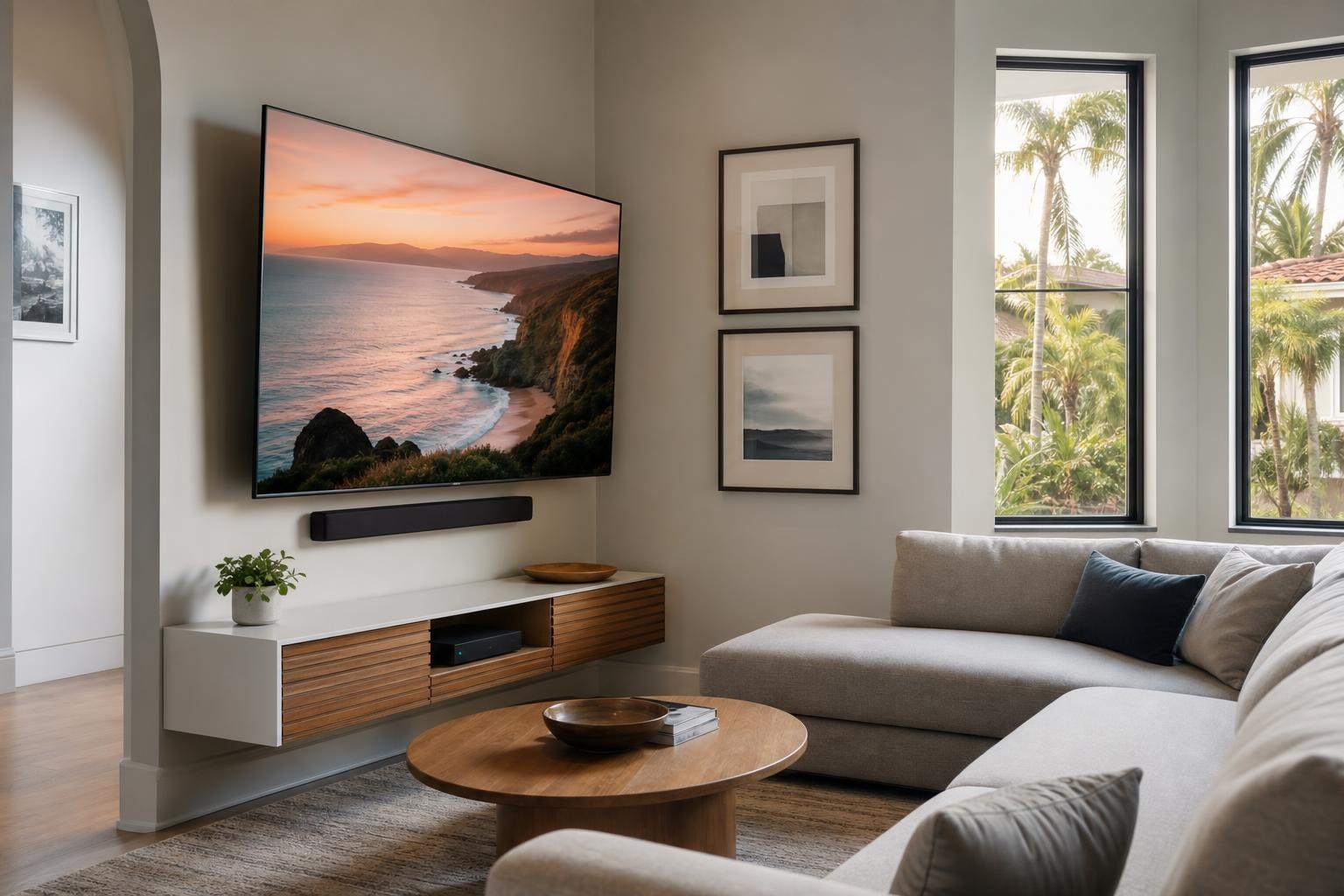
Should You Mount a TV in a Corner? 6 Decisions to Make Before Booking
September 30, 2026
A corner may look like the only practical place for your TV—especially when windows, doorways, furniture, or an open floor plan limit the available walls. But choosing the corner is not simply a matter of finding enough wall space. The screen must face the seating comfortably, move without hitting nearby surfaces, work with the soundbar, and look intentional after all the media cables and furniture are in place.
For many Central Florida homes, corner TV mounting can solve a frustrating room-layout problem. In other rooms, it introduces compromises that a different location would avoid. The following decisions can help you determine whether a corner is the right choice before you request a quote.
1. Can the screen face the main seating position?
Begin with the seat where the TV will be watched most often. A corner location works best when the screen can face that primary seat without requiring viewers to turn their heads for an entire movie, game, or show.
Secondary seats matter too, but they do not all need an identical view. A sectional may have one ideal viewing area and several acceptable side views. In an open-concept living room, the goal may be to make the screen visible from both the sofa and an adjacent kitchen or dining area.
Stand or sit in the actual viewing positions and consider whether the proposed corner creates:
- A comfortable view from the primary sofa or chairs
- Acceptable visibility from secondary seats
- Too much screen reflection from windows or glass doors
- A screen angle that interferes with a walkway or doorway
Remember that a blank TV screen and an active picture reflect light differently. Observe the room at the times when you usually watch television, particularly if strong Florida daylight enters through nearby windows or patio doors.
2. How much mount movement does the room require?
A TV mounted flat against one wall of a corner may not naturally face the room. In that situation, the mount may need to extend and turn the screen toward the seating area. The required movement depends on the wall selected, the depth of the television, the desired viewing direction, and nearby obstacles.
A fixed position may be suitable when the wall already faces the seating at a useful angle. A movable mount can be more appropriate when the screen needs to turn significantly or serve multiple viewing zones. However, the ability to move a TV does not mean every position will look equally clean or feel equally stable.
Consider the TV’s entire movement path, not just its final viewing position. A larger screen may approach the adjoining wall, a cabinet, a window treatment, or decorative shelving as it turns. Mount hardware and connected media cables also need enough room to move without becoming pinched, pulled, or prominently visible.
The TV mounting services available through TV Mounting Ocala can be combined with setup, soundbar placement, device hookup, and cable organization so the corner is planned as one entertainment area rather than as an isolated screen.
3. Will the TV clear the furniture and daily traffic?
Corner placement often affects more than the wall. A media console may sit diagonally beneath the television, remain flat against one wall, or be omitted in favor of floating furniture. Each arrangement changes the visual balance and available clearance.
Measure the space conceptually as a complete zone. Account for cabinet doors, drawers, decorations, speakers, streaming devices, and any furniture that must remain accessible. If the TV will turn, its lower corners should not appear to crowd the soundbar or furniture when angled toward the room.
Traffic flow is equally important. A screen that extends into a narrow route between the living room and kitchen can feel intrusive even when it technically fits. This is particularly relevant in open-concept homes and smaller living areas where people regularly pass close to the TV wall.
If the corner plan also includes an unassembled console, shelving unit, or media cabinet, Furniture Assembly Ocala can help coordinate the furniture footprint with the intended TV position. Planning both together reduces the chance of discovering that the assembled furniture is wider, taller, or deeper than expected.
4. Where will the soundbar go?
A soundbar usually looks most cohesive when it follows the screen’s orientation. That can be straightforward on a conventional flat media wall, but a corner introduces additional questions.
If the soundbar stays on furniture while the TV turns, the two may no longer face the same direction. If the soundbar is mounted with the television, its width, clearance, and relationship to the screen should be considered before the mounting position is finalized. The soundbar should not block the picture, crowd the bottom edge, or collide with nearby furniture as the TV moves.
Also consider where sound should be directed. A soundbar aimed into the room generally creates a more coherent experience than one left facing along a side wall while the television points toward the sofa. TV and soundbar setup can also include connecting the components and confirming that the intended controls and media sources work together.
5. Can the cables look clean from multiple angles?
Cable appearance is one of the biggest differences between a flat-wall installation and a corner installation. On a flat wall, the screen may hide much of the connection area. When a TV extends and turns away from the wall, viewers can see more of the back, mount, and cable route.
Plan for every connected item, including streaming devices, soundbars, Blu-ray players, and other media components. Their placement determines how many cables must travel between the TV and nearby furniture.
Clean routing should support movement as well as appearance. Cables that look tidy while the television is flat may become taut or conspicuous when the screen turns. Conversely, too much visible slack can distract from an otherwise polished corner.
Professional wire and cable concealment focuses on organized media-cable routing that fits the selected TV position, mount movement, and device layout. If a perfectly minimal appearance is your highest priority, compare the corner with a flatter wall before committing.
6. Does the corner make the room look balanced?
A television can function well in a corner and still look visually disconnected from the rest of the room. The best layouts give the screen a clear relationship to the furniture below it and enough space from windows, artwork, shelves, or tall cabinets.
A few visual questions can clarify the decision:
- Does the TV appear centered over something, or does it seem to float without context?
- Will a console or floating entertainment center make the corner feel grounded?
- Is there enough separation from curtains, framed art, mirrors, or shelves?
- Does the screen dominate the corner when extended?
- Will the installation still look intentional when the TV is not in use?
In many homes, a simple console and soundbar are enough to define the area. Another room may benefit from coordinated floating shelves or a floating entertainment center. The objective is not to fill every empty surface, but to make the TV feel like part of the room rather than an afterthought.
When a corner is usually a strong option
A corner deserves serious consideration when it provides the clearest view from the main seating, avoids a high or uncomfortable screen position, preserves important furniture walls, or allows one TV to serve more than one viewing area. It can also solve layouts where doors and large windows interrupt the available wall space.
Homes in Ocala and throughout Marion County often include open living spaces, while homes in The Villages may have furniture arrangements shaped by sliding doors, dining areas, or lanai access. If that describes your room, TV Mounting The Villages can help plan the TV, soundbar, furniture, and media-device arrangement together.
When another wall may be better
Reconsider the corner if the television would need to remain heavily extended at all times, the primary seats would still have poor viewing angles, or the screen would intrude into a busy walkway. A different wall may also be preferable when the corner makes cable routing unusually visible or leaves no coherent place for a soundbar and media furniture.
Do not choose a corner solely because it is empty. Compare it with at least one other possible location based on comfort, reflections, furniture clearance, and how the completed wall will look.
What to include when requesting a corner TV mounting quote
Before booking, gather the TV size and model, mount information if you already have one, photos of the corner and adjoining walls, approximate furniture dimensions, and a list of the devices and soundbar that need to be connected. Note whether the screen should remain in one position or turn toward multiple seating areas.
These details help identify the appropriate combination of mounting, TV setup, soundbar mounting, streaming-device or Blu-ray hookup, cable organization, and media-furniture assembly. You can review TV Mounting Ocala, get an instant quote, or use the contact page for additional questions. You can also call (352) 462-1913.
A corner can be an excellent TV location when the viewing angle, movement, sound, furniture, and cables are considered as one system. Thoughtful planning before installation helps the finished setup feel comfortable, uncluttered, and appropriate for the room.
Ready to Get the Setup Off Your To-Do List?
Whether you are planning a new TV, soundbar, streaming setup, floating entertainment center, media furniture, pictures, mirrors, shelves, or another related mounting project, TV Mounting Ocala can help you turn the plan into a clean finished setup.
TV Mounting Ocala
(352) 462-1913
Project details, equipment, wall conditions, compatibility, availability, and final pricing can vary. Confirm your exact scope and quote before booking.