
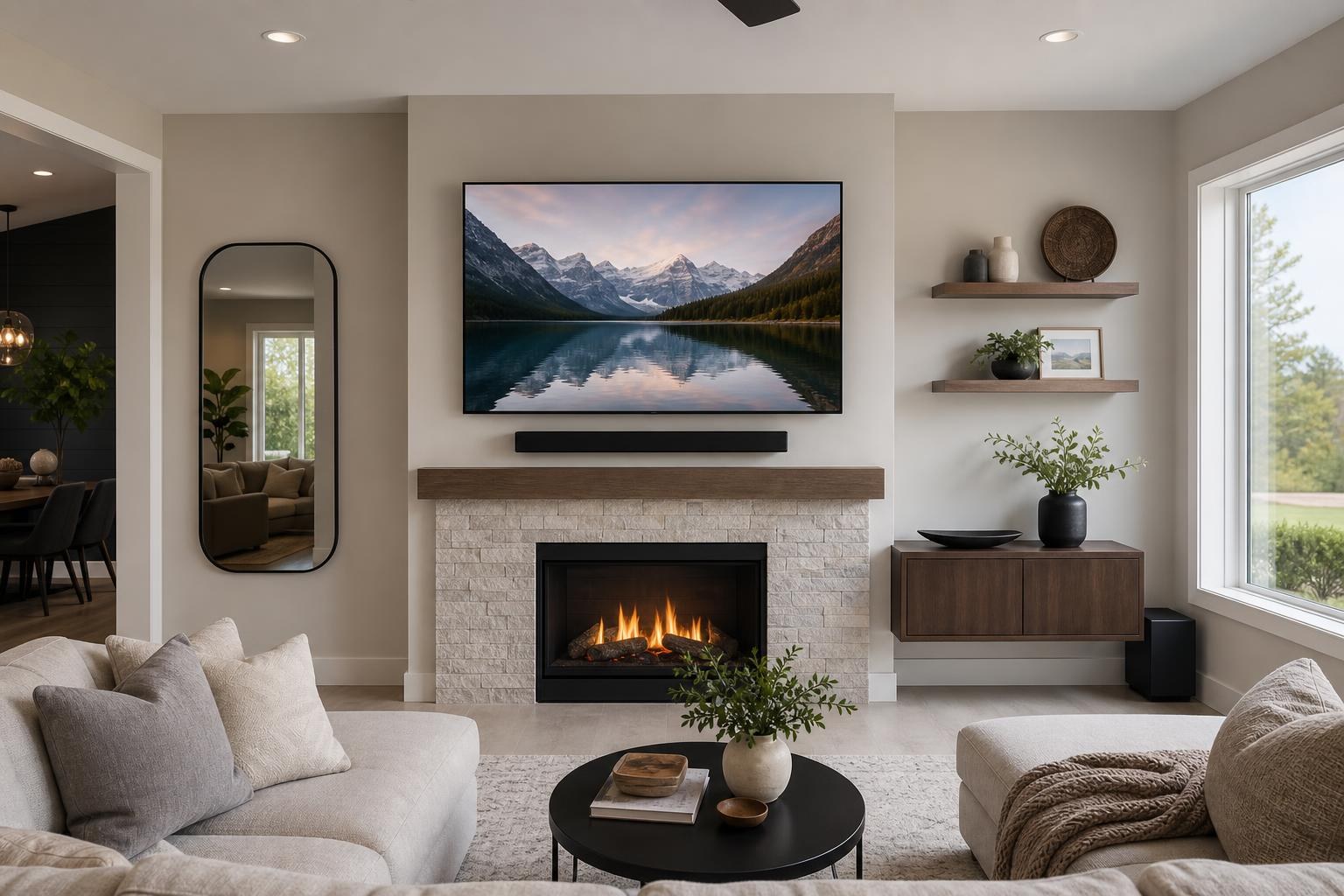
Should You Mount a TV Above the Fireplace? A Comfort-First Planning Guide
September 8, 2026
The fireplace is often the architectural center of a living room, which makes the wall above it an appealing place for a TV. But a centered, attractive result in photos can feel very different during a two-hour movie. The screen may be too high, the mantel may interfere with placement, or heat and glare may make the location less practical than expected.
Before committing to mounting a TV above a fireplace, evaluate the wall as a complete entertainment area. The TV, fireplace, seating, soundbar, media devices, mantel, and cable routing all affect whether the finished setup will be comfortable and visually balanced.
Is the Fireplace Wall Actually the Best TV Wall?
The strongest argument for mounting above a fireplace is usually room layout. In many Central Florida homes, the fireplace faces the primary seating area and provides the only uninterrupted focal wall. Using that space can preserve floor area, reduce competition between two focal points, and create a cleaner furniture arrangement.
That does not mean it is always the right location. A nearby wall may support a more natural viewing height, better control over window glare, or a simpler arrangement for a soundbar and floating console. The decision should begin with how the room is used rather than where the TV looks most symmetrical.
Consider who watches most often and from which seats. A setup used mainly for occasional sports or background viewing has different comfort priorities from a family room used for nightly movies, gaming, and streaming.
Viewing Comfort Matters More Than an Arbitrary Height
A common mistake is treating the mantel as the only placement reference. The mantel may determine how much physical space is available, but the viewers’ seated eye line determines whether the screen feels comfortable.
As the TV moves higher, viewers must direct their eyes and head upward. The effect becomes more noticeable when seating is close to the fireplace or when the screen is watched for long periods. A deep sofa, reclining seat, or greater viewing distance may make a higher screen feel more natural, while upright seating close to the wall can make the same placement uncomfortable.
Before choosing a mounting position, assess:
- The seated eye line from the main sofa and favorite chairs
- The distance between the primary seating and the screen
- The height and depth of the mantel
- The TV’s screen size and connection layout
- Whether the room is used for casual viewing, gaming, or long movies
A tilting mount can improve the screen’s viewing angle when a TV must sit higher than ideal. It does not fully correct a placement that causes viewers to look sharply upward, however. Mount selection and screen height need to be considered together.
Heat Should Be Evaluated Before the TV Is Positioned
Fireplace designs and operating conditions vary significantly. The type of fireplace, mantel design, surrounding materials, and way heat moves across the wall can all affect whether the area above it is suitable for a TV.
Do not assume that a mantel automatically protects the screen or that a fireplace that feels mild from the sofa creates no concern at the wall. The TV manufacturer’s placement guidance and the fireplace manufacturer’s requirements should be reviewed before installation. If those requirements conflict with the desired screen position, another wall may be the better choice.
This is also a reason not to buy a mount based only on TV size. The final position may require a fixed, tilting, or articulating design depending on wall conditions, viewing angle, mantel projection, and access to the TV’s media connections.
Glare Can Change Throughout the Day
A fireplace wall often faces windows, sliding doors, or an open dining area. That can create reflections that are easy to overlook while planning at night. Glossy screens, especially, can reflect bright windows and interior lighting.
Check the proposed location in the morning, afternoon, and evening if possible. Pay attention to the main seats rather than standing directly in front of the fireplace. A reflection that looks minor from the center of the room may sit directly over the screen from the sofa.
An articulating mount may help adjust the TV for certain seats or changing light, but it also moves the screen farther from the wall and changes how it relates visually to the mantel. If a thin, picture-like appearance is the priority, a lower-profile mount may look better. The tradeoff is less positioning flexibility.
Plan the Soundbar Before Finalizing the TV Height
Soundbar placement is frequently treated as an afterthought. Above a fireplace, every inch matters. A soundbar placed under the TV needs enough room to look intentional without crowding the mantel or blocking the lower edge of the screen.
Mounting the soundbar in relation to the TV can create a unified appearance, particularly when an articulating TV mount is used. It may also help keep the sound directed toward the same viewing area as the screen. Compatibility depends on the TV, soundbar, mounting components, and available space.
If the soundbar will rest on the mantel, consider mantel depth, visual scale, cable routing, and whether decorations will compete for the same space. The goal is not simply to make everything fit. The TV and soundbar should look like one planned system.
Where Will Streaming and Media Devices Go?
A TV above a fireplace can look clean from the front while leaving an awkward device problem elsewhere. Streaming players, Blu-ray players, game consoles, and control equipment still need intentional locations and organized media connections.
Depending on the room, devices may be housed in an existing cabinet, assembled media console, floating entertainment center, or nearby furniture. Some compact streaming devices may be positioned discreetly near the TV when compatible with the setup. Signal reliability, ventilation, remote operation, and access for future changes should all be considered.
Professional planning can combine TV mounting, soundbar setup, device hookup, and media-cable concealment instead of treating each item as a separate decision.
Cable Concealment Should Match the Fireplace Design
Visible cables tend to stand out more above a fireplace because the wall is already a focal point. A loose cable dropping toward one side of the mantel can make an otherwise centered installation look unfinished.
The right approach depends on the wall, fireplace surround, mantel, device location, and connections the entertainment system requires. Cable planning should focus on clean routing, organization, access, and a finished appearance. It should also account for future needs, such as adding a streaming device or changing the soundbar connection.
Decorative cable covers may suit some rooms, while other layouts support more discreet routing. Fireplace surrounds can make the path less straightforward, so it is helpful to evaluate cable options before deciding the exact TV position.
Signs That Another Wall May Be Better
The fireplace does not have to serve as both the architectural focal point and the entertainment wall. A different location may deliver a better everyday experience when:
- The screen would need to sit uncomfortably high
- Frequent heat exposure conflicts with manufacturer guidance
- Window reflections dominate the screen from primary seats
- The mantel leaves no balanced space for a soundbar
- Media devices and cables have no practical, organized location
- The room layout supports a more comfortable viewing wall nearby
Choosing another wall is not a design failure. It can allow the fireplace to remain a visual feature while the TV is placed for better viewing. Framed art, a mirror, or carefully arranged decor can maintain the fireplace as the room’s focal point.
What a Professional Should Review Before Mounting
A professional assessment should consider more than whether the bracket matches the TV. Wall conditions, TV dimensions, mount type, seated viewing lines, mantel clearance, heat considerations, glare, soundbar placement, device storage, and media-cable routing all influence the result.
This is especially useful for large TVs, slim OLED models, stone or tile surrounds, articulating mounts, and rooms where the TV must align precisely with a mantel. Careful handling and visual alignment matter because small placement errors are more noticeable against strong architectural lines.
Before an appointment, have the TV model, soundbar model, preferred viewing seats, mount if already purchased, and list of connected devices available. It also helps to decide whether you want the installer to handle TV setup, streaming-device connection, Blu-ray hookup, home entertainment programming, or media-furniture assembly during the same project.
Plan the Fireplace Wall as a Complete Entertainment System
Mounting a TV above a fireplace can work well when the room supports it. The best result is not simply a screen centered over a mantel. It is a comfortable viewing position with appropriate heat considerations, controlled glare, balanced soundbar placement, organized devices, and clean media-cable routing.
TV Mounting Ocala serves homeowners and property residents across Marion, Orange, Alachua, Sumter, and Citrus counties. If you are comparing fireplace placement options or want help coordinating the TV, soundbar, devices, and surrounding furniture, visit the TV Mounting Ocala website or get an instant online quote. You can also call (352) 462-1913 to discuss your project.
Ready to Get the Setup Off Your To-Do List?
Whether you are planning a new TV, soundbar, streaming setup, floating entertainment center, media furniture, pictures, mirrors, shelves, or another related mounting project, TV Mounting Ocala can help you turn the plan into a clean finished setup.
TV Mounting Ocala
(352) 462-1913
Project details, equipment, wall conditions, compatibility, availability, and final pricing can vary. Confirm your exact scope and quote before booking.
Related local services: Furniture Assembly Ocala