
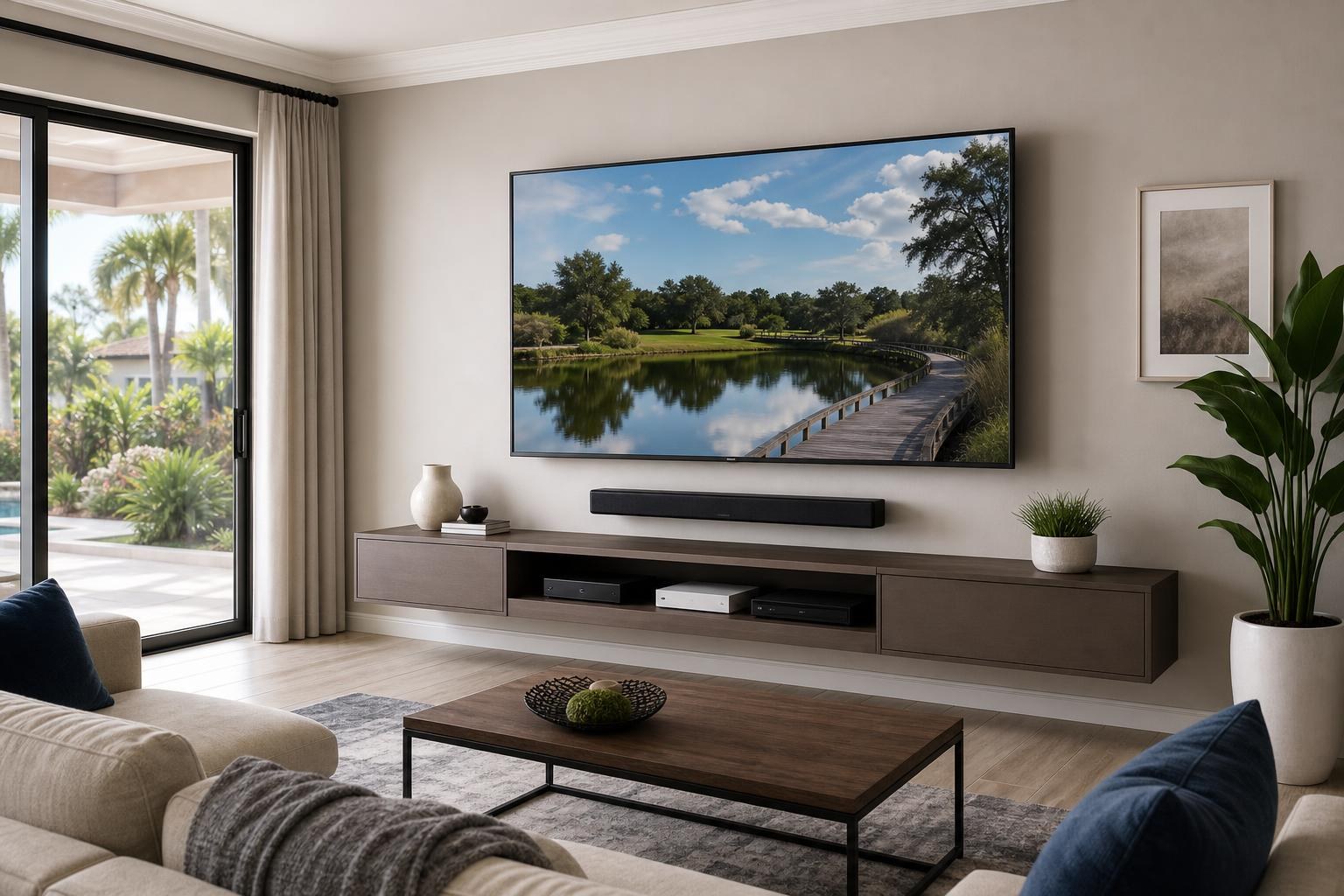
Planning a Large-TV Installation in Ocala: Coordinate the Screen, Soundbar, Devices, and Furniture
October 5, 2026
A large TV can fit the wall and still leave the room feeling unfinished. The screen may be too high for comfortable viewing, the soundbar may crowd the console, or streaming devices may end up difficult to reach. Even an attractive entertainment center can create problems if its size and placement were not considered before the TV was mounted.
The better approach is to treat the screen, soundbar, devices, cable appearance, and nearby furniture as one project. For homeowners planning a large-TV installation in Ocala, that coordinated plan can produce a cleaner wall, more comfortable viewing, and a system that is easier to use after the appointment.
Start With the Entire Entertainment Wall, Not Just the TV
A mounting plan often begins with the screen dimensions, but the TV is only one part of the finished layout. Its position affects everything below and around it, including the soundbar, media console, floating shelves, décor, and viewing furniture.
Before settling on placement, consider the complete visual footprint. A large screen may dominate a narrow wall, while a console that looked substantial in a showroom can appear undersized beneath it. A floating entertainment center may need more space than expected for doors, drawers, or media components. Framed art and shelves can also make an otherwise centered television look visually off-balance.
A professional can assess these elements together instead of making isolated placement decisions. The available options from TV Mounting Services include mounting, setup, soundbar support, cable concealment, device hookup, media-furniture assembly, and other related work that may belong in the same project.
Choose Screen Placement From the Seats You Actually Use
Large TVs can create a strong temptation to center the screen on the wall or align it with an architectural feature. Those choices may look orderly from the doorway, but they do not always create the best experience from the sofa or recliners.
The primary viewing position should guide the plan. Consider seated eye level, normal viewing distance, whether viewers regularly recline, and whether the television must be visible from more than one part of the room. In an open-concept Ocala home, for example, the screen may need to serve both a seating area and a nearby kitchen without being positioned awkwardly for either.
The mount style matters as well. A fixed arrangement can support a streamlined look when seating is directly in front of the wall. A mount with movement may be more practical when the room has several viewing angles, although the extended TV, wall clearance, and nearby furniture must all be considered.
Fireplace mantels, windows, doorways, and tall consoles can limit the available range. It is useful to identify these constraints before the appointment rather than expecting the screen position to solve every conflict on installation day.
Plan the Soundbar at the Same Time as the Screen
A soundbar should not be treated as an accessory that can simply be added wherever space remains. Its width, mounting method, control sensors, upward-facing speakers, and relationship to the TV can affect the final spacing.
Homeowners generally choose between mounting the soundbar with the TV arrangement or placing it on a console. Either option can work, but the correct choice depends on the room and equipment. A mounted soundbar can maintain a unified appearance, especially when a movable TV should keep sound aligned with the picture. A console placement may suit a stationary screen when the furniture offers sufficient depth and does not block the TV.
Confirm the soundbar model before finalizing the television height. Leaving this decision until later can result in a cramped gap, an unnecessarily high screen, or a soundbar that interferes with the TV’s lower edge. If a subwoofer or separate media component is included, decide where it can sit without obstructing walkways or cabinet access.
Keep Streaming and Media Devices Accessible
A clean entertainment wall should not make the equipment frustrating to use. Streaming devices, Blu-ray players, game systems, control hubs, and cable boxes may need ventilation, remote access, or occasional physical access for discs and connections.
As you plan the project, identify:
- Which devices will remain in the finished system
- Whether each device will sit on a console, inside furniture, or behind the TV
- Which components require regular access
- Whether existing media cables are long enough for the intended layout
- Which remotes and inputs the household uses most often
Device location also influences cable routing. A Blu-ray player in a lower cabinet creates a different path than a compact streaming device positioned near the television. Planning those paths in advance helps avoid visible loops, stretched cables, and furniture that cannot move or open normally.
TV setup can also include device hookup, streaming-device configuration, and home entertainment programming. This is particularly helpful when the goal is not merely to place the screen on the wall, but to leave the major sources connected and straightforward to operate.
Decide What “Clean Cables” Means for Your Room
Cable concealment is not one universal treatment. The best approach depends on the wall, mount movement, device locations, soundbar position, and whether furniture can help organize the media connections.
Some homeowners want media cables hidden as fully as the room allows. Others prefer a neat surface-routing solution that blends with the wall and remains easy to access. Inside a media console, shorter grouped connections may be more important than hiding every cord from view.
Make a list of everything that will connect to the TV. Include the soundbar, streaming device, Blu-ray player, game system, and any other active source. Unused legacy cables can add clutter and confusion, so the finished plan should focus on the equipment that will actually remain in service.
If the mount moves, the cable plan should accommodate that movement without tight tension or distracting slack. A tidy arrangement should look intentional when the television is in its normal position while still supporting the way the mount will be used.
Coordinate the Console, Floating Furniture, and Anchoring
The furniture beneath a large TV contributes to both function and visual proportion. Its width, height, depth, storage layout, and wall clearance can affect television placement. A tall console can push the screen higher than desired, while a shallow unit may not hold the selected components.
If the furniture still needs assembly, it is often better to include that work in the project plan. Furniture Assembly Ocala can be coordinated with TV and entertainment setup so the final dimensions are known before placement decisions are completed.
Furniture anchoring is another important consideration, particularly when a large screen may attract children or when drawers and cabinet doors change the unit’s balance during use. Anchoring should be planned around the specific furniture, wall, room layout, and manufacturer guidance. It is not an interchangeable add-on for every piece.
For floating entertainment centers, wall-mounted cabinets, or shelves, provide product details and dimensions when requesting a quote. These items require their own placement plan and must work visually with the television rather than being squeezed into whatever space remains.
What to Have Ready Before Requesting a Quote
A complete description helps distinguish a basic wall-mounting appointment from a coordinated large-TV installation. Before requesting an online quote, gather the information you already have:
- TV brand, model, and screen size
- Mount model, if already purchased
- Soundbar and media-device models
- Photos of the wall and surrounding room
- Wall surface and any fireplace, window, or corner constraints
- Console or floating-furniture dimensions
- Preferred cable appearance and device locations
- Any furniture assembly or anchoring needed
You do not need to solve every placement question beforehand. The purpose of this information is to clarify the project scope and identify components that should be handled together. Final pricing depends on the current online quote and the options selected for the installation.
Build One Plan for a More Finished Result
The strongest large-TV installations feel cohesive because no single component was planned in isolation. The screen sits comfortably in the room, the soundbar has deliberate spacing, devices remain usable, media cables look organized, and the furniture supports the arrangement instead of competing with it.
TV Mounting Ocala serves homeowners and property residents across Marion County and nearby Central Florida service areas. If you are coordinating a large TV with a soundbar, streaming devices, media furniture, cable concealment, or furniture anchoring, outline the full project when you request service.
You can get an instant quote and review booking options online. For questions about the scope of your setup, call (352) 462-1913 or use the contact page.
Serving another priority local market: TV Mounting The Villages.
Ready to Get the Setup Off Your To-Do List?
Whether you are planning a new TV, soundbar, streaming setup, floating entertainment center, media furniture, pictures, mirrors, shelves, or another related mounting project, TV Mounting Ocala can help you turn the plan into a clean finished setup.
TV Mounting Ocala
(352) 462-1913
Project details, equipment, wall conditions, compatibility, availability, and final pricing can vary. Confirm your exact scope and quote before booking.