
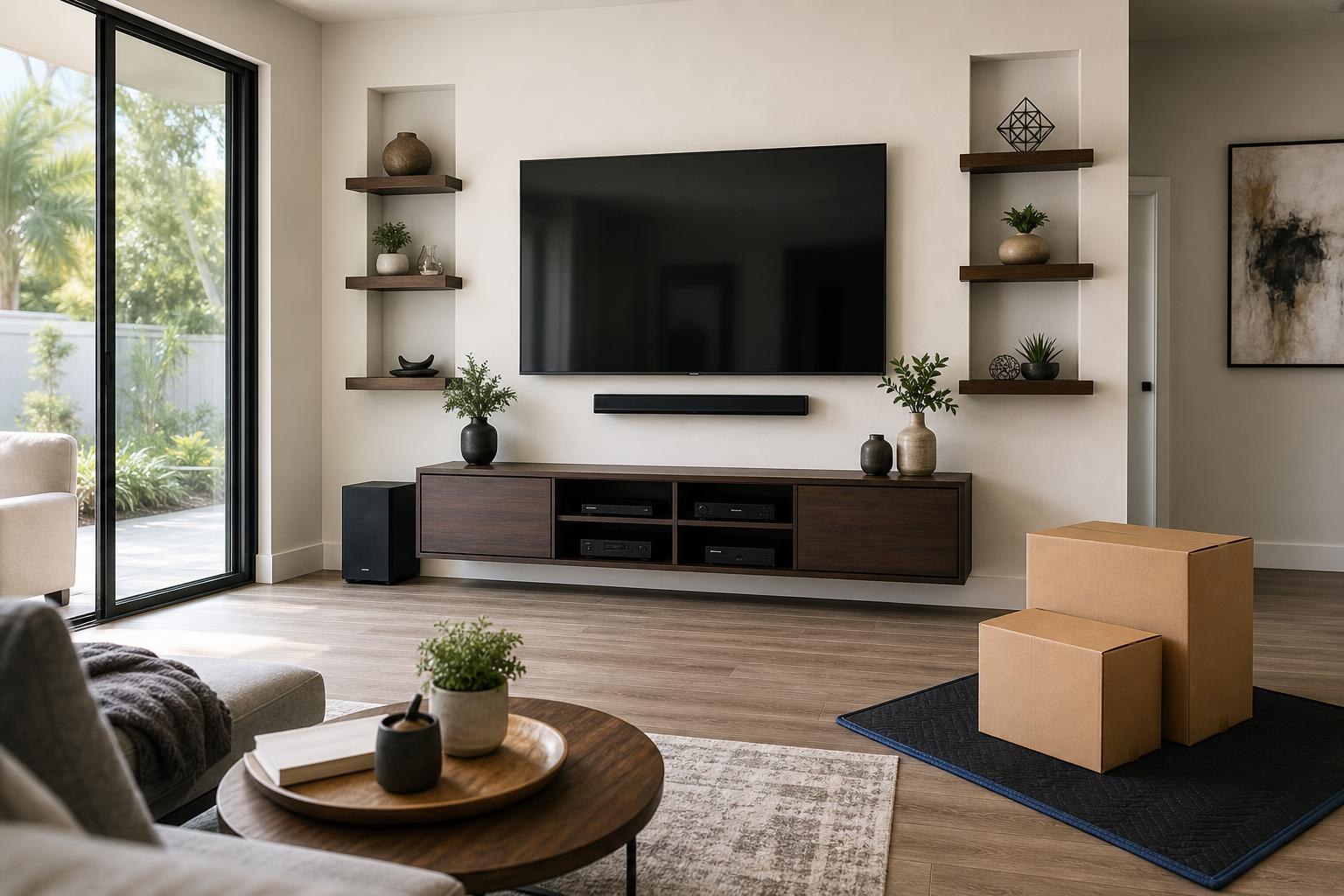
Before Media Furniture Assembly: Prepare the Room, Parts, TV Wall, and Setup Sequence
October 24, 2026
A boxed media console can look straightforward until the room, television, devices, shelves, and cable plan all enter the picture. If the furniture will sit below a mounted TV—or attach to the wall itself—the assembly appointment is not only about putting pieces together. The finished position has to work with the entire entertainment setup.
Preparing the room in advance helps prevent common complications: not enough assembly space, missing hardware discovered too late, a console that conflicts with the planned TV height, or devices that do not fit inside the available compartments.
For homeowners arranging Furniture Assembly Ocala, the following readiness guide explains what to check without turning the project into a do-it-yourself installation.
Start With the Finished Room, Not the Box
Before moving packaging or sorting parts, decide what the completed entertainment area should accomplish. Is the furniture mainly decorative, or must it hold a soundbar, game system, Blu-ray player, streaming device, internet equipment, and accessories? Will the TV remain on its stand, be mounted above the console, or already be on the wall?
These decisions affect the console’s final position and the amount of open space it needs. A piece that technically fits along a wall may still feel crowded if a door swings toward it, a walkway narrows, or cabinet doors cannot open fully.
Measure the furniture’s assembled dimensions from the manufacturer’s information rather than estimating from the carton. Account for depth as well as width. Deep media furniture can project farther into a compact room than expected, while shallow floating units may have limited space for larger devices and cable connections.
Create Enough Floor Space for Assembly
Assembly normally requires more open floor area than the furniture’s final footprint. Long panels need room to lie flat, components must remain visible, and the piece may need to be repositioned before it reaches its final location.
Clear loose décor, small tables, lamps, toys, pet items, and other movable objects from the immediate work area. A narrow path around a boxed console is not the same as a usable assembly zone. If possible, provide a clear route between the product, the assembly area, and the destination wall.
Central Florida homes include tile, wood-look surfaces, area rugs, and carpeted rooms. Let the service provider know about the floor surface and any especially delicate nearby furnishings when requesting a quote. Large rugs that bunch beneath panels can complicate staging, but a rug that defines the completed seating area may also be important to the final alignment. The goal is to make the work area accessible without stripping the room of useful placement references.
Keep Parts Organized Without Creating a Puzzle
It is helpful to confirm that all cartons arrived, but fully opening every hardware bag or mixing panels from multiple boxes can make the appointment less efficient. Keep manufacturer labels, instructions, hardware packets, and matching cartons together.
Before the appointment, look for obvious shipping concerns such as crushed corners, punctured cartons, cracked panels, or missing box numbers in a multi-carton shipment. Photograph visible package damage before moving the product. If the manufacturer identifies the item as “box 1 of 3,” confirm that all three boxes are present.
A practical staging checklist includes:
- All cartons associated with the furniture piece
- The manufacturer’s instructions and included hardware
- Any separately purchased legs, handles, brackets, or accessory kits
- The TV and soundbar model information when placement must coordinate with the furniture
- The devices intended for shelves, drawers, or cabinets
- Remotes and media cables needed for final setup
If you are preparing several products, keep each item’s parts separate. This is particularly useful when the project includes a media console, floating shelves, and another cabinet in the same room. Homeowners planning a larger Orange County setup can review Furniture Assembly Orlando while defining which items belong in the appointment.
Check Wall Clearance Before Choosing the Final Position
Baseboards, window trim, wall returns, curtains, and uneven corners can affect how closely furniture sits against a wall. Rear cable openings also need to align with the devices they serve. Pushing a cabinet tightly into place before testing those relationships can make connections difficult to access.
For a floating entertainment center, wall clearance becomes part of the placement decision rather than a final adjustment. The unit’s height must relate to the television, soundbar, seating view, and any nearby shelves or artwork. Share photos and product information in advance so the wall-mounted item can be considered as a complete installation rather than ordinary freestanding furniture.
Review the available TV mounting services if the appointment may also include a mounted screen, soundbar, floating shelf, cable organization, or media-device hookup.
Coordinate the Console With TV Placement
A common planning mistake is treating the console and TV as unrelated rectangles. Their widths, centerlines, heights, and visual weight should work together.
If the TV is already mounted, record the distance from the floor to the bottom of the screen and compare it with the assembled furniture height. Include anything that will sit on top of the console, especially a soundbar. A tall decorative object may also block part of the screen or remote signal path.
If the TV has not been mounted, avoid choosing its location from the empty wall alone. Seating position, screen size, mount movement, soundbar location, and console height all influence the finished arrangement. The console does not automatically determine the ideal screen height, but it can create important clearance limits.
This coordination is particularly valuable during move-ins and room updates in Sumter County. A combined plan through TV Mounting The Villages can account for the furniture, screen, devices, and viewing area before fixed wall-mounted pieces are placed.
Decide Whether Anchoring Belongs in the Scope
Freestanding furniture and wall-mounted furniture are different service needs. Some media pieces are designed to be secured or restrained, while others are manufactured specifically as floating cabinets. Review the product description and instructions so the intended configuration is clear.
Household considerations may also influence the decision. Children, pets, the furniture’s height, moving components, and how the unit will be used can all make anchoring an important discussion. If the home is rented or managed by an association, confirm any relevant property requirements before the appointment.
Do not assume that “floating style” means a cabinet is designed to mount to the wall. Some freestanding products merely have a raised appearance. Providing the exact product link or model number helps distinguish between decorative styling, optional restraint hardware, and a true wall-mounted installation.
Use the Right Sequence for the Complete Media Setup
The best sequence depends on what is already installed, but the relationships should be settled before the final positions are fixed. A typical planning order is:
- Confirm the furniture dimensions, room layout, and intended destination.
- Review the television, soundbar, shelves, devices, and cable-routing needs.
- Assemble the media furniture and verify its usable storage space.
- Coordinate final furniture placement with the TV wall and seating area.
- Address anchoring or wall-mounted components included in the service scope.
- Connect and arrange streaming, Blu-ray, soundbar, and other media devices.
- Test inputs, sound, remotes, and everyday access before considering the setup complete.
This order can change when a TV is already mounted or when a floating console establishes the room’s layout. What matters is avoiding a disconnected approach in which the furniture is finalized before anyone checks device fit, screen clearance, or cable access.
What to Share When Requesting a Quote
A useful furniture-assembly request should identify the product, number of cartons, final room, and whether the furniture is freestanding or wall mounted. Include clear photos of the destination wall and the unopened product. If stairs, tight turns, or limited room access affect where the cartons are located, mention that as well.
Also state whether you want assembly only or a broader entertainment setup involving TV mounting, soundbar setup, cable concealment, device hookup, programming, shelves, or furniture anchoring. Clear scope information makes it easier to select the appropriate options in the current online quote.
TV Mounting Ocala serves homeowners and residents across Marion, Orange, Alachua, Sumter, and Citrus counties. To plan your media-furniture assembly and related TV setup, get an instant quote online or call (352) 462-1913.
Ready to Get the Setup Off Your To-Do List?
Whether you are planning a new TV, soundbar, streaming setup, floating entertainment center, media furniture, pictures, mirrors, shelves, or another related mounting project, TV Mounting Ocala can help you turn the plan into a clean finished setup.
TV Mounting Ocala
(352) 462-1913
Project details, equipment, wall conditions, compatibility, availability, and final pricing can vary. Confirm your exact scope and quote before booking.