
TV Mounting in The Villages: Plan a Cleaner, More Comfortable Living Room
September 12, 2026
A new TV can be the right size for the room and still feel wrong once it is mounted. It may sit too high above the console, reflect afternoon light, overwhelm nearby furniture, or leave the soundbar and streaming devices looking like afterthoughts.
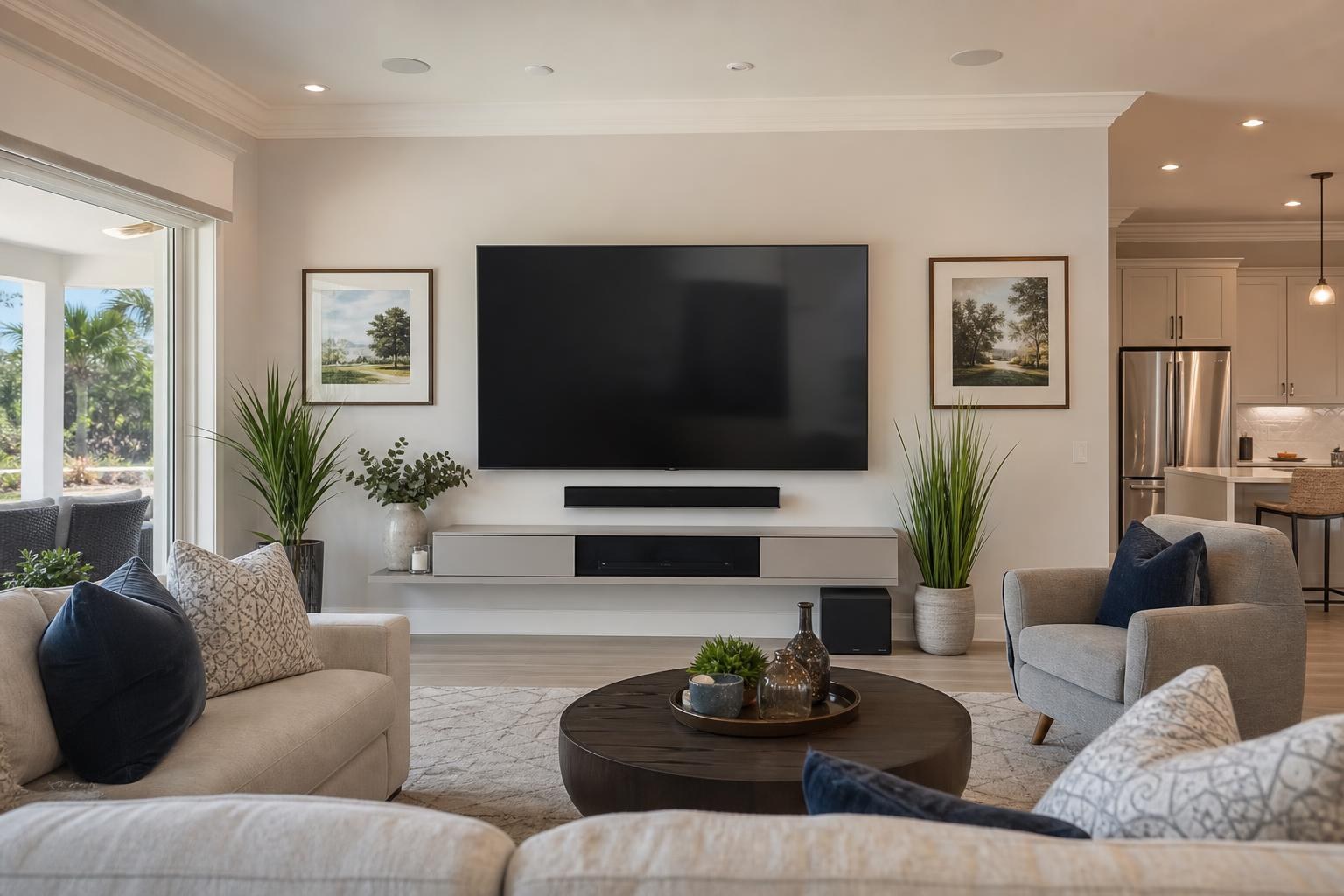
For homeowners planning TV mounting in The Villages, the best results come from treating the living room as one connected entertainment space. The TV, seating, soundbar, media furniture, devices, artwork, and visible cables should all work together.
Before you request a quote, make a few room-level decisions. They will help you choose appropriate mounting options and give your installer a clearer picture of the finished space you want.
Begin With the Main Viewing Position
The center of a wall is not always the center of the viewing experience. Your primary sofa or recliner should guide the TV’s position, especially when the living room opens into a dining area, kitchen, or nearby conversation space.
Start by identifying where people will watch most often. A TV intended mainly for evening movies from one sofa can be planned differently from a screen that needs to remain visible from several areas of an open room.
Also consider how the seating is actually used. Recliners can change a viewer’s sightline, while deep sofas may place the viewer farther back than the furniture’s front edge suggests. If seating will be replaced or rearranged soon, plan around the intended layout rather than the temporary one.
Choose Height for Comfort, Not Empty-Wall Symmetry
One of the most common planning mistakes is placing a TV according to the available wall space without accounting for comfortable viewing. A screen can look visually centered between the ceiling and furniture yet still feel too high during a full program or movie.
TV size, viewing distance, seating height, and reclining position all influence a comfortable result. Larger screens need particularly thoughtful placement because even a modest change in height becomes more noticeable across the full display.
The furniture below the TV matters as well. A tall cabinet can force the screen upward. A low floating entertainment center may create more flexibility, but its proportions and installation height should be coordinated with the TV rather than decided separately.
Plan the TV and the furniture beneath it as one composition. This produces a cleaner wall and helps prevent awkward gaps, crowding, or a screen that appears disconnected from the rest of the room.
Check Daytime Glare Before Selecting the Wall
A wall that looks ideal in the evening may perform poorly when Central Florida sunlight enters the room. Windows, glass doors, bright adjoining spaces, and glossy surfaces can create reflections that are easy to miss while the TV is playing a vivid showroom image.
Look at the proposed wall at different times of day with the TV screen dark, if possible. A dark screen makes reflections easier to identify. Consider whether window coverings are normally open, whether glass doors face the screen, and whether viewers would need to change the room every time they turn on the TV.
A tilting or articulating mount may help in some layouts, but mount movement should not be treated as a cure for every reflection. The strongest plan starts with a sensible wall and uses mount flexibility to improve viewing rather than compensate for a consistently difficult location.
Decide Whether the TV Should Move
A fixed, tilting, or articulating mount changes both how the TV functions and how it sits in the room. The right choice depends on actual viewing habits rather than the assumption that more movement is always better.
- Fixed positioning can suit a straightforward room with seating centered directly across from the TV.
- Tilt capability may be useful when the display must sit somewhat above the preferred viewing position.
- Articulating movement can help when viewers watch from more than one direction or need access behind the screen for connected equipment.
Consider the TV’s size, wall location, nearby furniture, door paths, and desired viewing angles. A screen that extends or swivels also needs enough surrounding clearance to move without crowding shelves, pictures, or cabinetry.
Coordinate the Soundbar Before the TV Is Mounted
If a soundbar is part of the room, decide whether it will mount with the TV, mount independently below it, or rest on the media console. Each option affects spacing and the overall visual balance.
A TV-mounted soundbar can move with an articulating display, keeping the sound directed toward the same viewing area. An independently mounted soundbar can create a crisp architectural look when the TV remains in one position. Console placement may work when the furniture is deep enough and the soundbar does not block the bottom of the screen.
Compatibility also matters. The installation plan should account for the soundbar’s dimensions, connection type, mounting provisions, and relationship to the TV’s sensors and controls. TV Mounting Ocala provides TV mounting, soundbar setup, device hookup, and home entertainment programming, allowing these pieces to be planned together instead of added one at a time.
Treat Media Furniture as Part of the Installation
A floating console or assembled entertainment center can define the entire wall. Before choosing one, compare its width and depth with the TV, soundbar, and equipment that it needs to support or contain.
Think about what must remain accessible. Streaming devices, Blu-ray players, remotes, network equipment, game consoles, and decorative items all need appropriate locations. Closed furniture may look minimal, but device control, ventilation, cable access, and everyday usability still need consideration.
If new furniture has not been assembled yet, include that detail when requesting service. TV Mounting Ocala’s scope includes floating entertainment-center installation, media-furniture assembly, floating shelf mounting, and furniture anchoring. Coordinating these tasks can help establish accurate spacing before the final TV position is confirmed.
Plan Media Cables and Devices Before Hiding Them
Clean cable organization is easier when every device has a planned home. Hiding the visible TV cable while leaving several device cables draped beside the console does not create a truly finished entertainment wall.
Make a list of equipment that will connect to the TV now, plus anything likely to be added soon. Include the soundbar, streaming player, Blu-ray player, game console, or other media device. Note where each item will sit and whether it needs regular hands-on access.
Cable concealment options depend on the wall, furniture, mount movement, and equipment layout. For an articulating TV, routing also needs to allow controlled movement without pulling or pinching media cables. A professional can assess the room and recommend an organized approach that fits the selected setup.
Do Not Forget Programming and Everyday Control
A mounted TV is not fully finished if the household still struggles to reach streaming apps, select the right input, or get sound from the intended speaker. Setup and programming are especially important when replacing an older TV while keeping an existing soundbar or media player.
Before the appointment, gather the devices and remotes you intend to use. It is also helpful to know which streaming services need to be available and whether the TV will connect through the home’s Wi-Fi. Passwords can remain private while still being accessible to the homeowner during setup.
Professional TV setup may include connecting compatible media devices, configuring inputs, setting up streaming hardware, and helping the TV and soundbar operate as a more understandable system.
Information to Gather for a More Useful Quote
Installation pricing depends on the current online quote and the options selected. To make that quote more relevant, have the following information ready:
- TV brand and screen size
- Whether you already own a compatible mount
- The intended room and wall location
- Desired fixed, tilting, or articulating movement
- Soundbar details and preferred placement
- Devices that need to be connected or programmed
- Media cable concealment and organization goals
- Any floating console, shelf, or media furniture involved
Photos of the wall, seating, and furniture can also help communicate the layout. If you are uncertain about an equipment combination or service selection, use the contact page or call (352) 462-1913 before booking.
Finish the Room as One Complete Entertainment Space
For homes in The Villages and surrounding areas of Sumter and Marion counties, a clean living-room setup is not simply a TV attached to a wall. It is a comfortable viewing position, balanced soundbar placement, sensible furniture proportions, organized media cables, accessible devices, and controls the household can use confidently.
TV Mounting Ocala serves communities across Marion, Orange, Alachua, Sumter, and Citrus counties. When you are ready to plan your TV, soundbar, devices, and entertainment furniture as one coordinated project, get an instant online quote and select the options that fit your room.
Ready to Get the Setup Off Your To-Do List?
Whether you are planning a new TV, soundbar, streaming setup, floating entertainment center, media furniture, pictures, mirrors, shelves, or another related mounting project, TV Mounting Ocala can help you turn the plan into a clean finished setup.
TV Mounting Ocala
(352) 462-1913
Project details, equipment, wall conditions, compatibility, availability, and final pricing can vary. Confirm your exact scope and quote before booking.
Related local services: Furniture Assembly Ocala
Serving another priority local market: TV Mounting The Villages.