
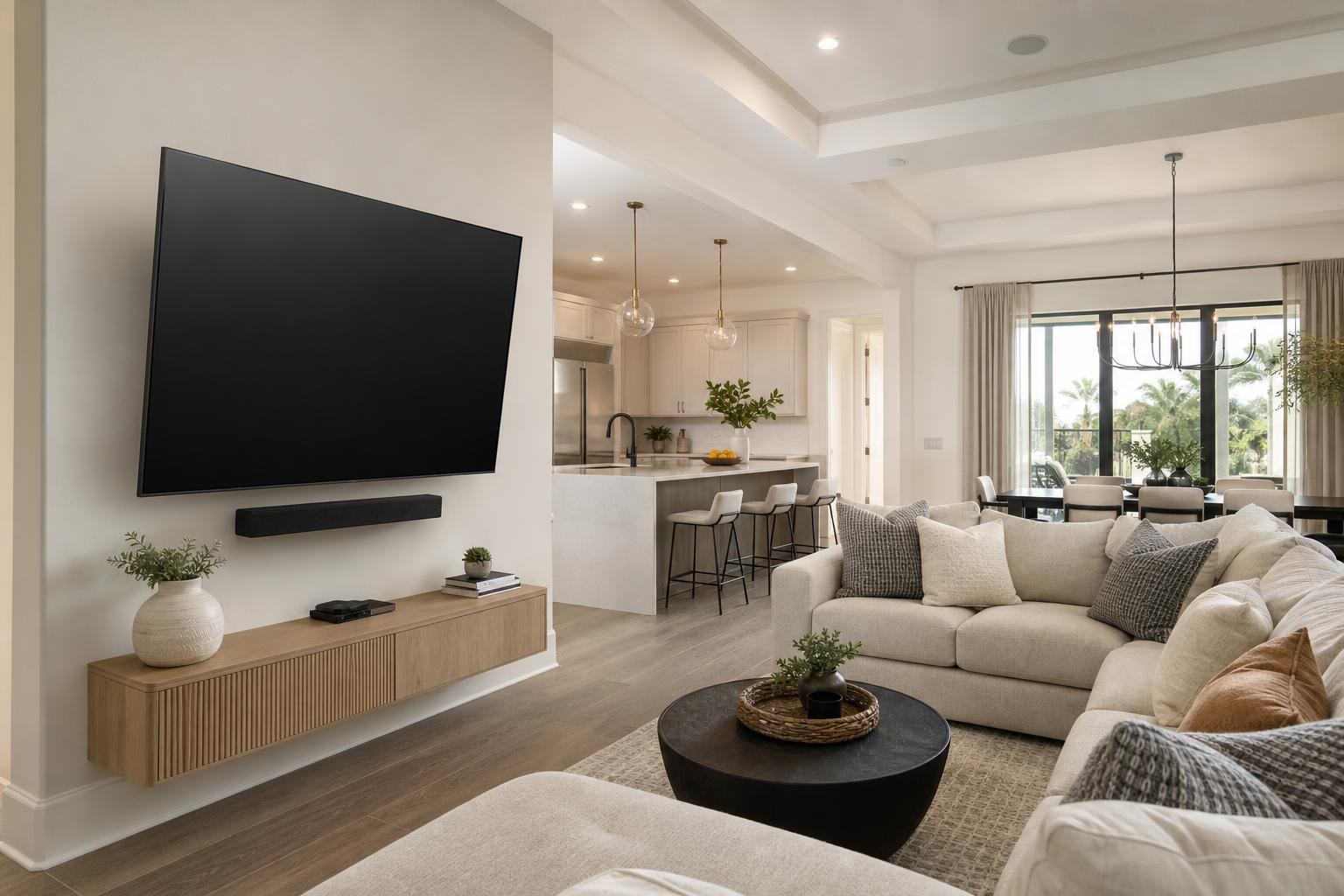
One TV, Multiple Viewing Angles: How to Plan an Open-Concept Entertainment Wall
September 7, 2026
In an open-concept room, the hardest TV-placement decision is rarely which wall has enough space. It is deciding which viewing position should work best when the sofa, kitchen island, dining table, and occasional chairs all face the screen from different angles.
Trying to make every seat equally perfect can lead to a TV that is too high, awkwardly offset, or disconnected from the furniture below it. A better plan establishes one primary viewing zone, protects the most important secondary sightlines, and uses the right mounting and setup choices to make the room flexible.
Before you book a service, consider how the household actually uses the room—not just how the floor plan looks when no one is watching.
Start With the Primary Viewing Position
Every open-concept space needs a priority. For most homes, that is the main sofa or sectional where people watch movies, sports, and evening television. In other households, the kitchen sightline matters nearly as much because the TV is used while cooking or gathering around an island.
Ask which position is used for longer viewing sessions. That seat should usually have the most comfortable and direct relationship with the screen. A person occasionally checking a game from the dining table can tolerate a more angled view than someone watching a two-hour movie from the sofa.
This priority helps resolve competing placement choices. Instead of centering the TV on the entire open room, the installer can plan around the primary seating group while preserving reasonable visibility from nearby zones.
Map the Sightlines That Actually Matter
A floor plan can suggest that a screen is visible from several areas, but furniture, decorative objects, and normal household activity may change the experience. Walk through the positions where people are likely to watch and note what interrupts the view.
- Main seating: Is the screen reasonably centered on the sofa or the seats used most often?
- Kitchen or island: Will cabinets, pendant fixtures, counter items, or people moving through the room block the view?
- Dining area: Is this a meaningful viewing position or only an occasional glance toward the screen?
- Side chairs: Are these regular TV seats or primarily conversation seating?
- Walkways: Could an extended mount project into a frequently used path?
These questions separate important viewing angles from theoretical ones. The goal is not to aim the TV at every corner simultaneously. It is to keep the main experience comfortable and give secondary viewers a clear enough image when needed.
When Mount Movement Improves the Room
A mount with controlled side-to-side movement can be useful when the kitchen and sofa sit on different axes. The screen can remain aligned with the entertainment wall during everyday use, then turn toward another area for a specific occasion.
That flexibility is most useful when the television needs to serve distinct zones at different times. It is less effective when people expect to watch from opposite directions at the same moment. Turning the screen toward one area naturally makes the angle less direct for another.
Mount movement also affects the finished appearance. Depending on the wall, television, and viewing direction, turning the screen may reveal the mount or organized media cables behind it. The range of movement needs to work with the TV’s dimensions, nearby shelves, wall edges, soundbar position, and furniture depth.
If the TV will rarely change direction, a simpler low-profile position may create a cleaner result. If changing angles is part of daily life, discuss that before selecting the mounting approach—not after the screen is already installed.
Do Not Solve a Side Angle by Mounting the TV Too High
Homeowners sometimes raise a TV to improve visibility over a kitchen counter, dining chair, or decorative object. That may open one distant sightline while making the primary sofa less comfortable.
Screen height should be judged from normal seated viewing, the television’s size, the distance to the main seats, and the room’s visual proportions. Open-concept architecture does not automatically justify placing the TV near the ceiling.
If an object blocks a secondary view, it may be better to reconsider the TV wall, furniture arrangement, decorative placement, or mount movement. Raising the screen should not be the default answer to every obstruction.
Account for Windows, Reflections, and Daytime Viewing
Open rooms often have windows or glass doors on more than one side. A wall that looks ideal at night may produce distracting reflections during the time of day when the TV is used most.
Check the proposed location in both bright and dim conditions. Look from the main sofa and secondary areas because reflections can appear very different from an angled seat. Also consider whether turning the screen toward the kitchen would point it toward a bright window.
Room orientation, curtains or shades, screen finish, and TV brightness all affect the result. Placement should balance image visibility with the room’s architecture rather than treating glare as an afterthought.
Plan the Soundbar for a TV That Changes Direction
Audio can expose a poor open-room plan even when the picture remains visible. A soundbar left against the wall while the TV turns toward the kitchen may sound less connected to the image. Mounting the soundbar in a coordinated position can help the picture and sound feel like one system.
The correct arrangement depends on the TV, soundbar, mount, furniture, and desired movement. Clearance matters as well: the soundbar should not interfere with the screen, floating furniture, shelves, or the mount’s intended range.
Open spaces also allow sound to travel into dining and kitchen areas differently than it does in an enclosed media room. Professional setup can include soundbar hookup, compatible control settings, input checks, and home entertainment programming so daily operation stays simple.
Treat Furniture and Cable Routing as Part of Placement
A mounted TV still needs a visual relationship with the entertainment center, console, or floating media furniture below it. Centering the screen on the wall while the console is centered on the sofa can create an obvious mismatch. The entire composition should be planned together.
Before installation, confirm the width and final position of any unassembled media furniture. If a floating entertainment center or shelf is part of the project, its spacing should account for the TV, soundbar, devices, and the room’s main visual axis.
Media-cable organization also needs to support the intended mount position. A turning screen requires enough controlled cable movement without leaving a loose cluster visible from the side. Streaming devices, a Blu-ray player, game systems, and soundbar connections should be considered before deciding where components will live.
TV Mounting Ocala can coordinate TV mounting and related home entertainment services, including TV setup, soundbar setup, media-device hookup, cable concealment, floating entertainment-center installation, and media-furniture assembly.
What to Decide Before Requesting a Quote
You do not need to engineer the finished layout yourself, but a few details will make the planning conversation more productive:
- Which sofa or chair is the primary viewing position?
- Which secondary area matters most: kitchen, island, dining table, or side seating?
- Should the TV remain flat most of the time or change direction regularly?
- Will a soundbar be mounted with the television?
- Which streaming players, Blu-ray players, consoles, or other media devices need hookup?
- Will existing or new entertainment furniture sit below the screen?
- Are there daytime reflections or physical obstructions you have already noticed?
Photos of the full wall and the room from each important seating position can also help communicate the layout. Include surrounding windows, furniture, wall edges, and nearby openings rather than sending only a close-up of the proposed TV location.
A Better Open-Concept TV Plan Balances Priorities
The strongest arrangement is not necessarily the one that points directly toward every seat. It is the one that gives the household a comfortable primary view, useful secondary sightlines, appropriate screen movement, coordinated sound, and a clean relationship with the furniture and cables.
TV Mounting Ocala serves homeowners and residents across Marion, Orange, Alachua, Sumter, and Citrus counties. If you are planning a television for a room with competing seating angles, you can get an instant online quote based on your selected service options or contact TV Mounting Ocala with questions about the overall setup.
Ready to Get the Setup Off Your To-Do List?
Whether you are planning a new TV, soundbar, streaming setup, floating entertainment center, media furniture, pictures, mirrors, shelves, or another related mounting project, TV Mounting Ocala can help you turn the plan into a clean finished setup.
TV Mounting Ocala
(352) 462-1913
Project details, equipment, wall conditions, compatibility, availability, and final pricing can vary. Confirm your exact scope and quote before booking.
Related local services: Furniture Assembly Ocala
Serving another priority local market: TV Mounting The Villages.